Branding. Chances are you’ve heard this term before. “Isn’t that just a marketing thing?” Exactly. Branding and marketing go hand in hand, and they need to. But there’s often some confusion about the difference between the two concepts.
SUMMARY
- Branding is who you are; marketing is how you communicate
- Strong branding creates top-of-mind awareness among guests
- Investing in branding leads to higher prices, loyal guests, and brand recognition
- Consistent repetition of your brand identity reinforces recall
In this article
- What is branding?
- Why is branding important in the hospitality industry?
- Why invest now?
- Where do you see branding?
- What are the benefits of branding?
- Example: The Avocado Show
What is branding?
Think of it as neighbor and neighbor. Like the kitchen and the waitstaff. Branding and marketing need each other, but they are not the same.
Branding is literally who you are and what you want to convey. It is your DNA, your character, and all the associations that come to mind when people hear your name. It is what makes you different from others.
Marketing is more the link between you and your guest. It’s meant to reach and engage guests and is tailored based on your branding.
Branding is who you are. Marketing is how you tell the story.
Why is branding so important in the hospitality industry?
These days, the hospitality industry is bursting at the seams. That’s great, of course, but how do you ensure that a large portion of those guests come to your establishment?
Action plan: be top-of-mind.
In other words, be the first brand that comes to mind for (potential) guests and stand out so distinctly that guests can’t ignore you.
Through the right branding strategy, you create a unique visual identity that people recognize, remember, and never forget.
Rather have it done for you?
Your Brand Ambassador can do everything for you, and our in-house designers make your files print-ready. Or see your brand on everything first, in Studio.
Why invest in branding now?
Experience is becoming increasingly important
Branding contributes to the guest’s overall experience. A restaurant is judged on more than just a good steak.
This growing importance of experience is taking the hospitality industry to a higher level, also known as Hospitality 2.0.
Instagrammable is the new normal
It’s becoming increasingly important for an experience to invite sharing on social media. No “dinner with friends” can escape an extensive Instagram shoot anymore.
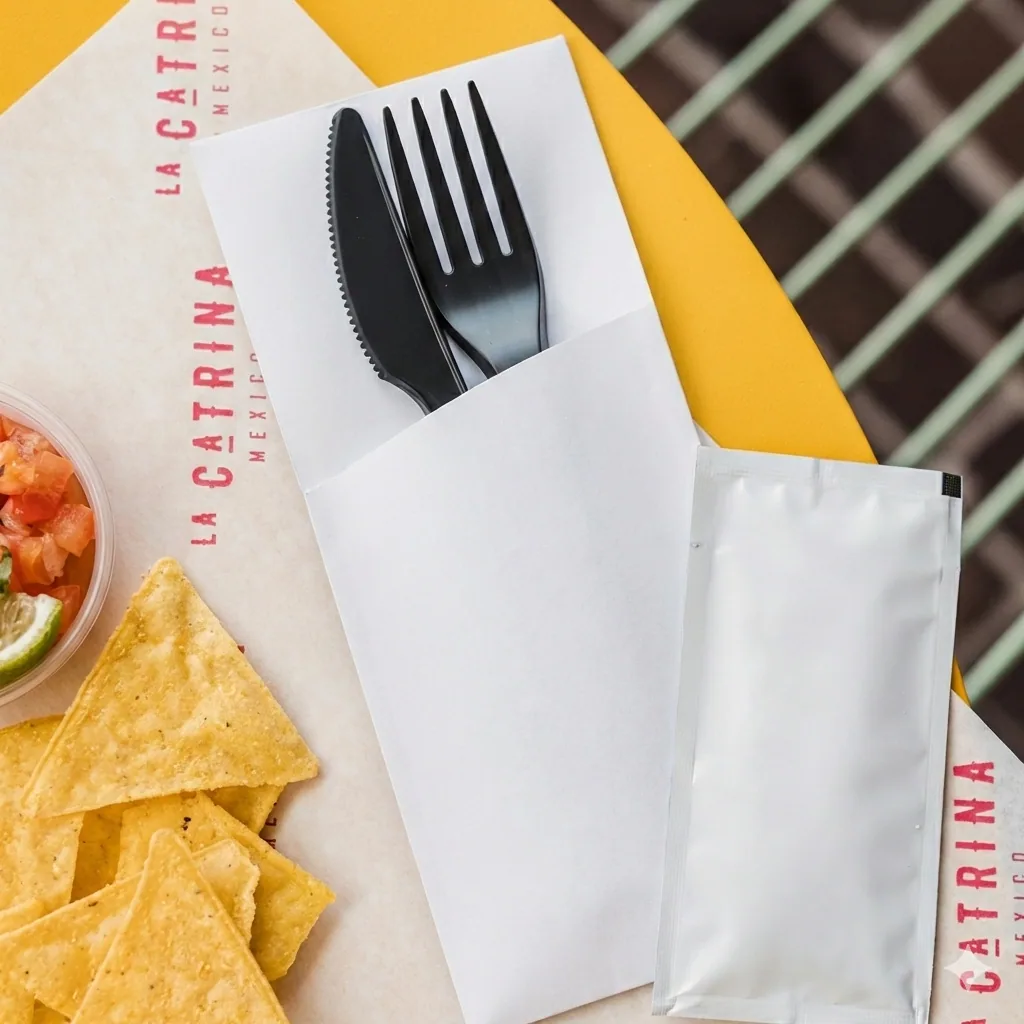
A cutlery pouch in your brand’s style is immediately linked to your business by 1.000 followers. Free advertising.
Use the slider to see the difference
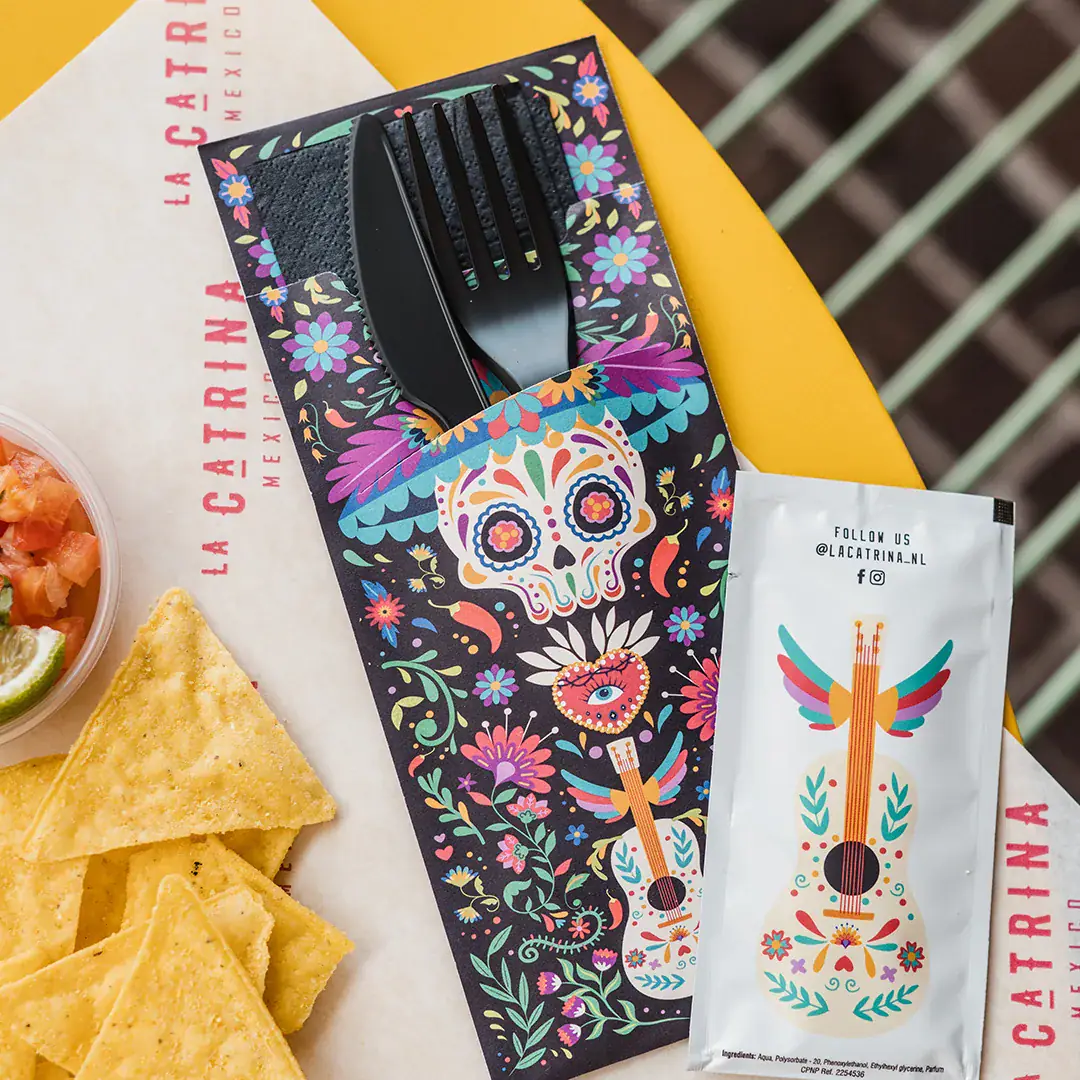
 ⇔VOORNA
La Catrina | Westfield Mall of the Netherlands
Where do you see branding?
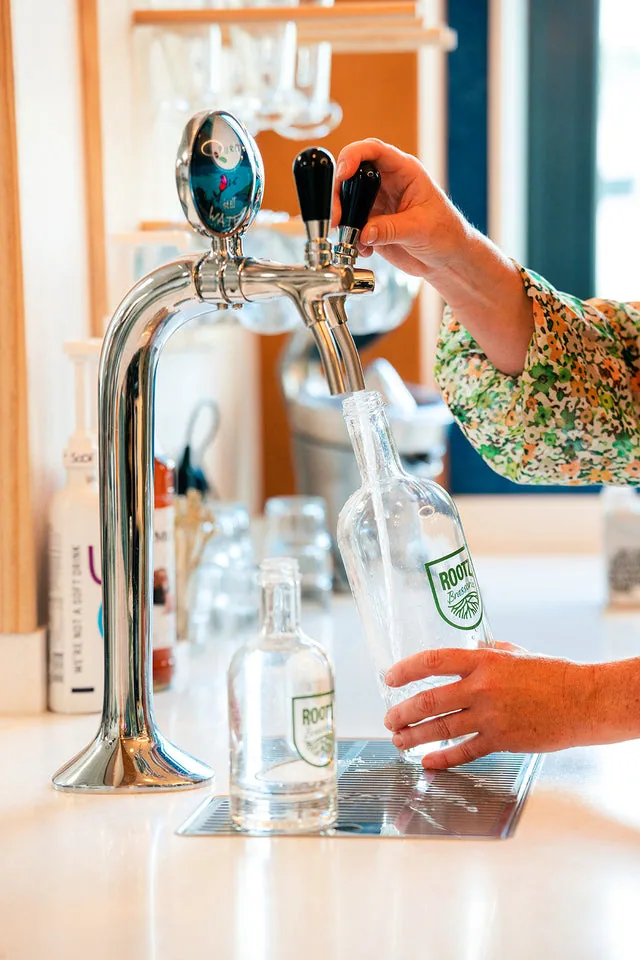
The expression of your hospitality brand often starts with a logo and a corporate identity. It can then be incorporated everywhere:
- Interior design of your establishment
- Social media
- Appearance of your staff
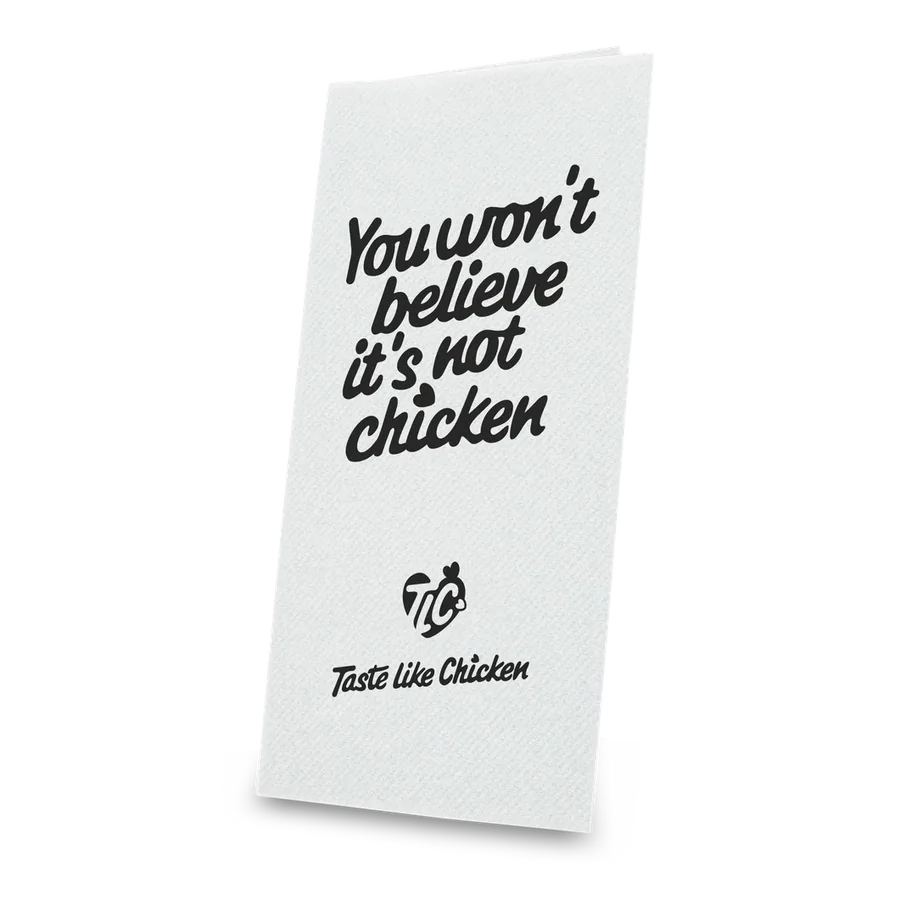
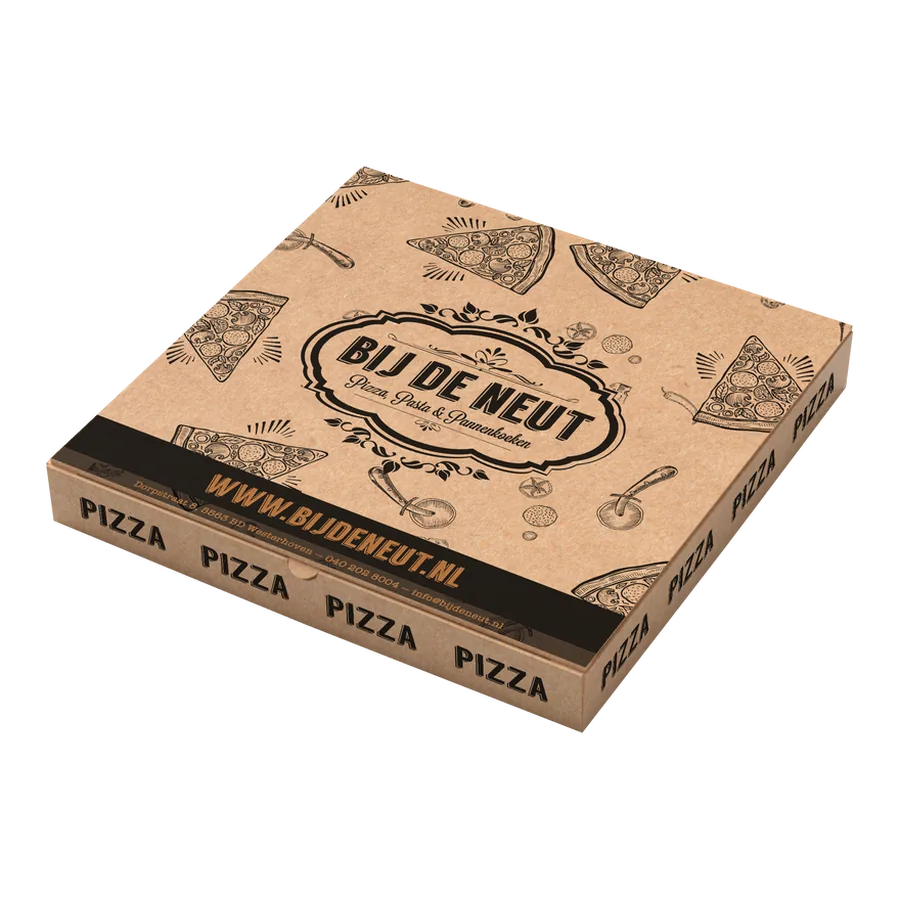
- Packaging and napkins
- Menus
- Tone of voice in all your communication
The power of branding lies in repetition: the more often the guest is exposed to it, the stronger the memory.
What are the benefits of branding?
While the financial results of marketing are directly measurable, branding is not an “immediate” transaction. Yet it is a sustainable investment that leads to long-term revenue growth.
Higher prices
Guests are willing to pay more for an experience.
Loyal guests
Guests return more often because your concept has carved out a distinctive place in their minds. They build a connection with you and spread your name.
Brand awareness
A strong image ensures that people talk about you and recognize you.
“Hey honey, there’s a bag from Eetcafé Snert riding by—should we order that tonight too?”
Example: The Avocado Show
A great example of branding in the hospitality industry is The Avocado Show. Ron Simpson’s brand literally feels like a “show,” and he and his staff go all out to create a total experience.
Their branding elements:
- The avocado as the star
- Brand identity in pink and green
- Slogan: “Good vibes and pretty healthy food”
- Cheerful, funky tone of voice
These elements are reflected in all their communications, allowing them to consistently engage their guests.
It’s never too early or too late
Did you know that McDonald’s originally had a yellow-and-red logo, but replaced the red with green in 2009? Green conveys sustainability, and due to a shift in their core values, this color better suited the brand.
Branding is anything but set in stone. It’s about anticipating the outside world and responding to trends.
Curious about what we can do for you?
With effective branding, you’ll also leave the right impression on your guests. Request a quote with no obligation and speak with an expert.