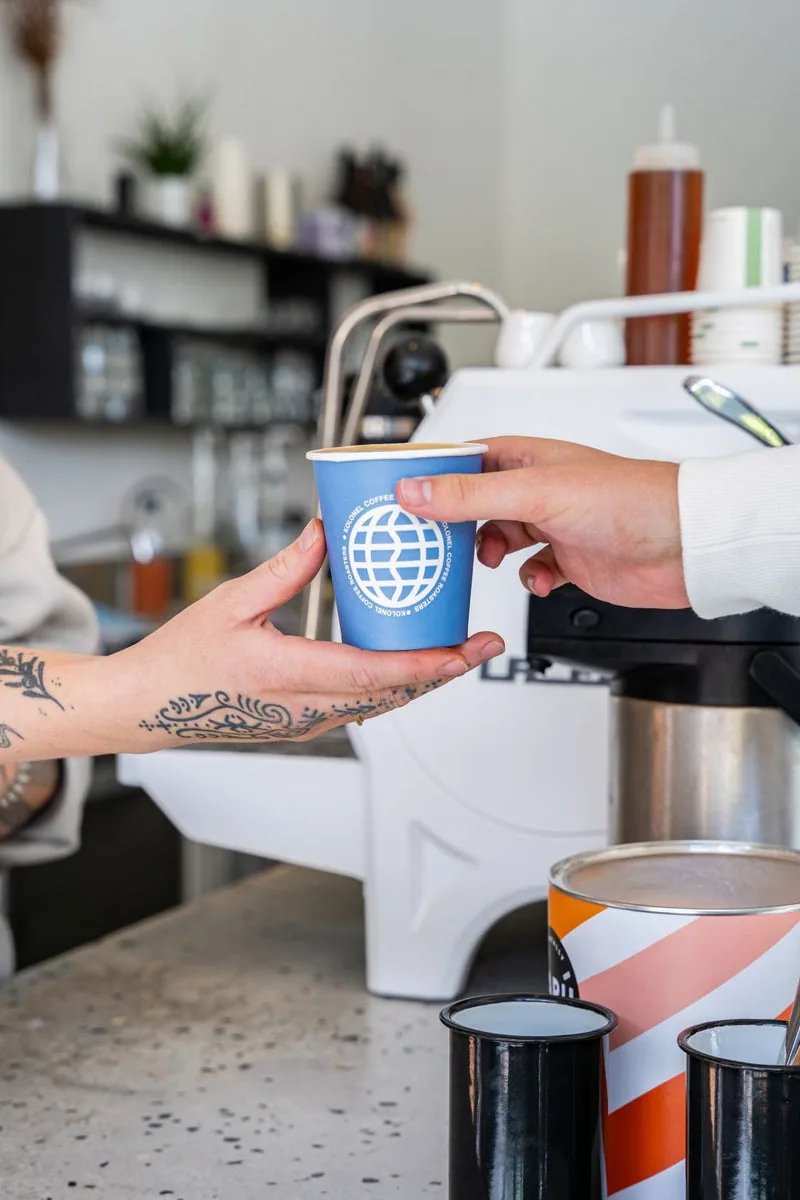
Temporary conditions for paper or cardboard drinking cups and food packaging containing plastic in 2024
As of January 1, 2024, new rules are in effect for single-use cups and food packaging containing plastic. This regulation, imposed by State Secretary Heijnen of Infrastructure and Water Management, aims to reduce plastic use and promote a circular economy. Therefore, late last year, an instruction was issued to temporarily adjust the enforcement of single-use plastic rules in 2024, and new temporary conditions apply to paper or cardboard drinking cups and food packaging. This impacts entrepreneurs who use drinking cups and food packaging containing plastic.
Important conditions:
- Maximum 5% plastic: Paper and cardboard packaging may contain a maximum of 5% plastic if collected for recycling.
- Mandatory registration: Entrepreneurs must register with the ILT (Inspectorate for the Living Environment and Transport).
- Collection and recycling requirements: 75% collection and 100% recyclability must be demonstrated.
- Administration: Records of collection must be maintained and kept for at least three years.
Enforcement and alternatives:
- The ILT will conduct inspections and enforce compliance if the 5% plastic norm is exceeded.
- Reusable cups are strongly recommended to comply with the new regulations without administrative burdens.
No enforcement on additional charges for consumption on the go
For consumption on the go, there will be no enforcement in 2024 regarding the mandatory additional charge for single-use cups and containers containing plastic.
For more details, read the full ILT news message.
---------------------------------------------------------------------------------------
It has been known for some time that the negative environmental effects of litter are significant. To reduce this litter, the European Single Use Plastics Directive, also known as the SUP legislation, has come into force. This is an important step in the fight against plastic pollution. The directive aims to reduce and ultimately ban the use of certain single-use plastic products to decrease the amount of plastic waste in the environment. In this article, we will discuss the content of the SUP legislation and its implications for the hospitality industry.
What is the SUP legislation?
The SUP legislation is a European directive adopted in 2019. The purpose of this directive is to reduce the amount of plastic waste in the environment, particularly in the oceans. The directive applies to various plastic products, such as plastic cutlery, straws, stirrers, balloon sticks, and single-use food and beverage containers.
These plastic products are often for single use only and are discarded after use. This creates a large amount of plastic waste that cannot be recycled and ultimately ends up in the oceans, where it causes significant damage to the environment and biodiversity.
Impact of the SUP legislation on the hospitality industry
The SUP legislation also has implications for the hospitality industry. This brings about a number of changes, both financial and administrative, which we will explain further below to help you. The Branding Club fully supports these decisions to reduce environmental impact.
The most important measures to prevent plastic litter are:
- A sales ban on plastic products
- Mandatory marking on products containing plastic
- Levies, for both the customer and the producer
Rather have it done for you?
Your Brand Ambassador can do everything for you, and our in-house designers make your files print-ready. Or see your brand on everything first, in Studio.
SUP Legislation 2023
Since July 3, 2021
Sales ban
- Products made from oxo-degradable plastics (e.g., bags and bottles)
- Balloon sticks (except for industrial or other professional use)
- Cotton swabs
- Food and beverage containers and cups made of styrofoam (expanded polystyrene EPS)
- Stirrers
- Straws (except for medical use)
- Cutlery
- Plates
Mandatory marking
- Packaging of tobacco products with filters
- Plastic drinking cups (the logo must be on the drinking cup)
- Packaging of wet wipes, sanitary pads, tampons, and tampon applicators
Since January 1, 2023
Levies for the producer
This applies to producers. The application of the definition of 'producer' or 'importer' for the contribution to Verpact (formerly Afvalfonds Verpakkingen) changes. The biggest change here concerns who the levies are imposed on. For some products, extended producer responsibility will apply. This means that as a producer, you contribute to the collection of waste and the cleanup of litter. This means the following:
- Packaging bearing the name, brand, or logo of the brand owner will be subject to levies from the Packaging Waste Fund. The brand owner must declare these packages to the Packaging Waste Fund.
- When products are placed on the market in packaging, the party that first professionally places that product in packaging on the market in the Netherlands pays.
- Point-of-sale packaging refers to empty packaging that is only filled at the point of sale, such as a coffee cup at a coffee shop or a chip container at a snack bar. For these packages, the party that first places the packaging on the market in the Netherlands is responsible for the levy on the packaging. This party will therefore have to remit the determined levy for this to the Packaging Waste Fund.
In some cases, The Branding Club will also be charged for this. For these packages, we are therefore forced to pass this on to our customers. The rates for this have been set by the Packaging Waste Fund, and can be found here.
When a product has been made on behalf of a brand owner and this is visible on the packaging, the brand owner (our customers) is obliged to pay this contribution to Afvalfonds Verpakkingen. This applies to, among others, the following products:
- Tobacco products with filters
-
Single-serving food packaging
- Salad bowls
- Food trays (if they have a laminate)
- Autoboxes (if they have a laminate)
- Burger boxes (if they have a laminate)
- Disposable cups
- Bags and wrappers
- Lightweight plastic carrier bags
- Beverage packaging
- Balloons
- Wet wipes
In short: all single-use packaging intended for food or drink that is made of plastic or contains plastic.
From July 1, 2023
Levies for the customer
- Customers will have to pay for plastic disposable cups and food packaging if they collect or have food or drinks delivered.
- In addition, you are obliged to offer an alternative that can be reused. Such as a self-brought cup or packaging. Or a cup or packaging that customers can return with a deposit or other return system.
Recommended prices
You can decide how much the customer should pay for a cup or packaging. The government suggests these amounts as a guideline:
- € 0,25 for cups
- € 0,50 for a meal (this can consist of multiple packages)
- € 0,05 for pre-packaged vegetables, fruit, nuts, and portion packs
The amounts are based on research into the optimal price: not too high so that the guest is not deterred, and not too low so that the measure has an effect.
From January 1, 2024
Sales ban
-
If customers wish to consume food and drinks on-site, no disposable plastic cups and food packaging may be used.
- For example, in the canteen, office, restaurant or snack bar, or at a festival. Reusable drinking cups and food packaging will become standard.
Exceptions
- You collect the materials for high-quality recycling
- An exception applies to products that can be recycled into cups or food packaging. This currently only applies to cups or food packaging made of PET (polyethylene terephthalate). To make use of this exception, you must register with the Human Environment and Transport Inspectorate. You must also collect the material yourself and offer it for high-quality recycling. The minimum percentage you must collect increases annually (from 75% to 90%).
- Packaging made of other materials may therefore no longer be offered for on-site consumption from 2024, not even for an additional charge.
From July 3, 2024
- Caps must remain attached to plastic bottles and beverage packaging. This ensures they are automatically returned for recycling and do not end up as litter.
Please note!
The new rules also apply to disposable cups and food packaging made from bioplastics (biodegradable plastic or plastic from renewable raw materials). Bioplastics are just as harmful to the environment as other plastics.
What does this mean for you?
Our advice is to also familiarize yourself with waste management and the SUP legislation and what this means for your hospitality business. This way, you prevent any misunderstandings. In addition to the fees we have to pay for waste management, the fees for SUP products will also be passed on where applicable.
- The most important thing is that our customers, as brand owners, are considered importers for products from January 1, 2023, and must therefore file their own declarations. This was not previously regulated. We will provide our customers, as quickly as possible, with the weights of products they purchase and display this per order. Our customers must pay the fee as shown in the table for waste management fees.
- Apart from the above waste management contribution, there is also the SUP surcharge. For food packaging, the SUP surcharge applies if the packaging falls under SUP legislation. This entails an amount of €2,30 per 1000 units of products containing plastic. For this contribution, which our customers must pay, we will also provide information, and our customers are obliged to declare it themselves.
Given our wide assortment, we will need some time to map all this out clearly. Our goal is January 2023, but it may also be that this is not feasible. Therefore, we reserve the right to apply additional levies where necessary. We hope for your understanding in this matter.
Do you want to know if your products fall under the SUP legislation?
Please contact us. We would be happy to work with you to find more sustainable and future-proof packaging alternatives!